
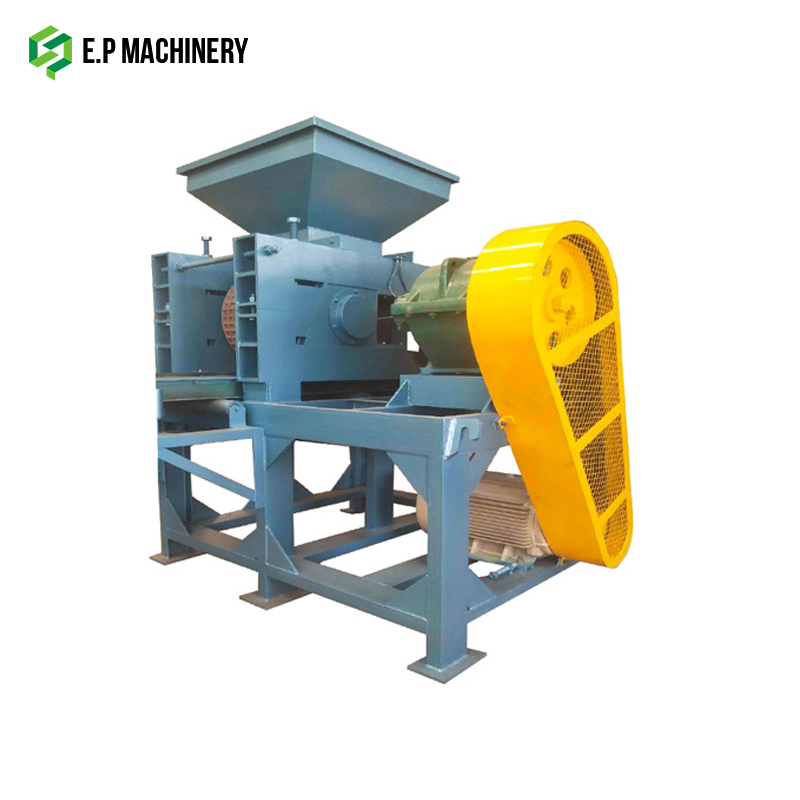
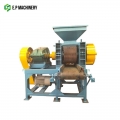
Roller press for briquetting
Details
property
1. A hydraulic roller briquetting press compresses certain drier materials.
2. If the powder particle size is too large, increase the pressure of the hydraulic roller briquetting press to reduce the service life of the press. If the powder particle size is too small, it will generate more dust, affecting the working environment and the pressing effect. Only when the powder particle size meets the required specifications can the optimal performance of the metal powder ball be achieved.
3. Because the briquetting pressure is high and the material is special, the main components of the hydraulic roller briquetting press—specifically the roller shells—must be forged from alloy steel rather than ordinary cast steel, and then the whole assembly is heat-treated. This treatment makes the roller hardness nearly approach that of bearing steel, which can meet the system requirements.
Application Materials
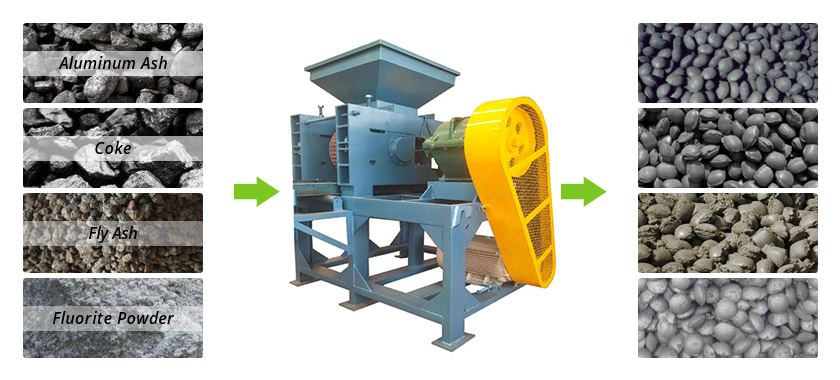
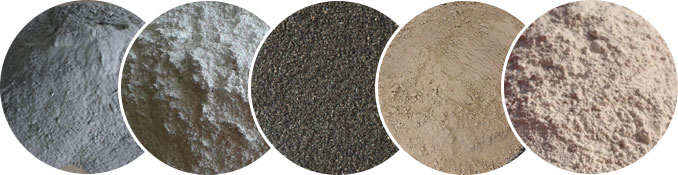
The hydraulic roller briquetting press is mainly used to briquette magnesium metal powder, iron scale, steel slag, finely ground copper powder, manganese powder, pure ore powder, non-ferrous metal powders, and other waste and auxiliary materials. It is widely used in the fields of metallurgy and refractory materials.
Shape of the finished product
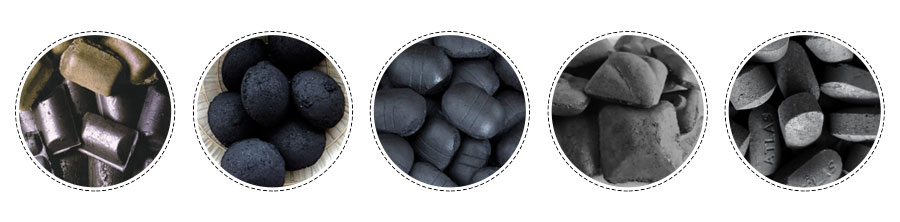
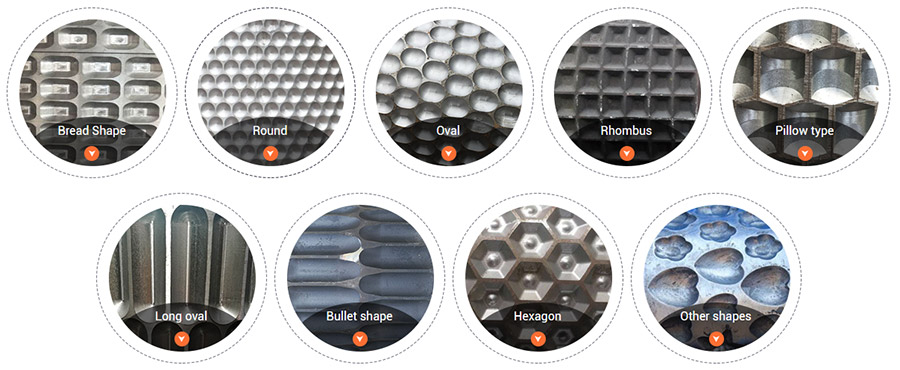
The hydraulic roller briquetting press can produce several special shapes of finished products, such as oval, square, goose-egg shape, loaf shape, pillow shape, etc. The customer can choose the desired shape of the finished product.
Selection of Pressing Rollers
The pressing rollers are made of wear-resistant alloy steel, the bearings are manufactured from rolling mill bearing series, the main shaft is made of large-diameter steel, and the hydraulic system is supplied by a well-established large-scale manufacturer.
Working Principle of the Roller Briquetting Press
The main machine of the roller briquetting press is driven by a variable-speed electromagnetic motor, which transmits power to the drive shaft through a pulley and cylindrical gearbox via a needle coupling. The drive shaft and the driven shaft operate synchronously through exposed gears. The hydraulic device is installed behind the driven bearing seat.
The spiral feeding device is driven by a variable-speed electromagnetic motor and rotates through a belt pulley and worm reducer, which forcibly pushes the pressed material into the main feed inlet. Due to the constant torque characteristic of the electromagnetic speed-regulating motor, when the material feed rate of the screw feeder matches the material required by the main machine, a consistent feeding pressure can be maintained, ensuring stable quality of the briquettes.
If the material feed rate is too high, the feeder motor will be overloaded; if the feed rate is too low, the briquettes will not form properly. Therefore, professional operation is a crucial condition to ensure the normal functioning of the briquetting process.
Recommendation for the Hydraulic System
The hydro-mechanical safety device of the roller briquetting press works by supplying high-pressure oil from a hydro-mechanical pump into the hydraulic cylinder, causing axial displacement of the piston. The front end of the piston rod rests on the bearing seat to meet the required production pressure.
When excessive materials or metal blocks enter between the two pressing rollers, the pressure on the piston rod of the hydraulic cylinder becomes overloaded. The hydraulic pump stops operating, the energy storage tank cushions the pressure fluctuation, and the safety valve opens to return oil. As a result, the piston rod moves, increasing the gap between the pressing rollers, allowing solid objects to pass through the rollers. The system pressure then returns to normal, protecting the pressing rollers from damage.
This machine can adjust the pressure according to the required briquette density, making production flexible and efficient.


 hank@ep-machine.com
 +86 185 6888 1755
 Get A Quote
